SMS code login
Password Login
Get SMS verification code

Get SMS verification code

2025-12-26
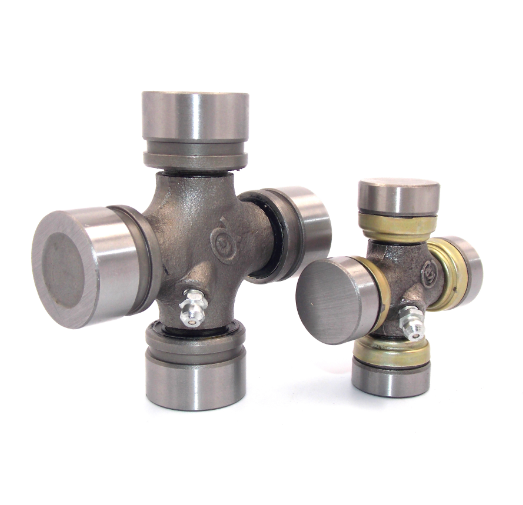
Wanxiang Qianchao’s plan to build a production capacity of 1.2 million sets of robot-specific bearings by 2026 instantly ignited enthusiasm in the robot component sector. Many investors have taken notice that this traditional auto parts manufacturer is now fully sprinting toward the core component field of humanoid robots and industrial robots. However, some have raised doubts: what gives Wanxiang Qianchao the confidence to lay out robot bearings? Can the 1.2 million unit production capacity be smoothly put into place and absorbed by the market? Today, we will break down the industry logic behind this production capacity plan and Wanxiang Qianchao’s true competitiveness in plain language.
First, let’s talk about the market value of robot-specific bearings—they are far more than just ordinary mechanical parts; they are the "joint lifeline" of robots. Whether it is the robotic arms of industrial robots or the limb joints of humanoid robots, high-precision, high-wear-resistance specialized bearings are required to enable flexible movement. These bearings demand micron-level precision and a service life of over 10,000 hours, making them core high-value-added components in robot manufacturing. The latest industry data shows that the global market size of robot-specific bearings exceeded 20 billion yuan in 2025, a year-on-year increase of 55%; the domestic market size also reached 8 billion yuan, with the demand growth rate for humanoid robot bearings surpassing 80%. However, the localization rate of domestic robot-specific bearings is currently less than 30%, and high-end products are almost monopolized by foreign-funded enterprises such as Japan’s NSK and Sweden’s SKF. This creates a huge gap for import substitution, which is the core opportunity for Wanxiang Qianchao to enter this field.
Wanxiang Qianchao’s confidence to announce the 1.2 million unit production target stems from over 30 years of bearing technology accumulation and its supply chain foundation in auto parts. As a leading domestic manufacturer of automotive bearings, Wanxiang Qianchao holds a market share of over 20% in products such as wheel hub bearings and drive shaft bearings. It has a complete industrial chain layout from bearing steel smelting to finished product processing, and the machining precision of its precision bearings has reached 0.001 millimeters. This technical reserve can be directly transferred to the production of robot-specific bearings. In terms of technology implementation, the company has developed harmonic reducer bearings for humanoid robots and RV reducer bearings for industrial robots. The products have passed tests by multiple domestic robot complete machine manufacturers, and the first batch of samples has achieved small-batch supply. In addition, relying on the new energy vehicle industry chain resources of Wanxiang Group, Wanxiang Qianchao can quickly integrate supporting components such as motors and electronic control systems, providing robot complete machine manufacturers with an integrated "bearing + transmission" solution—an advantage that pure bearing manufacturers find difficult to match.
The 1.2 million unit production capacity plan is not blind expansion, but is based on the explosive demand in the robot industry and the company’s market positioning. On the demand side, the output of domestic industrial robots increased by 30% year-on-year in 2025, and the R&D iteration of humanoid robots has accelerated. Mass production plans for models such as Tesla Optimus and Xiaomi CyberOne have been put on the agenda. In the humanoid robot field alone, the demand for bearings is expected to exceed 500,000 sets in 2026; combined with demand from industrial robots, the total market demand is expected to surpass 1.5 million sets. Wanxiang Qianchao’s 1.2 million unit production capacity is just right to cover mainstream market demand. The company has already signed intentional orders with multiple robot complete machine manufacturers, with the order lock-in rate for the first batch of 300,000 sets of production capacity exceeding 60%, providing initial guarantee for capacity absorption. From the perspective of industry competition, most domestic enterprises laying out robot-specific bearings are small and medium-sized technology companies with a general production capacity of less than 100,000 sets. Wanxiang Qianchao’s large-scale production capacity launch will directly seize market share in import substitution, and is expected to become the "production capacity leader" in the domestic robot bearing sector.
Behind this production capacity plan lies Wanxiang Qianchao’s strategic ambition to transform from auto parts to the robot track. As competition in the new energy vehicle industry intensifies, the gross profit margin of automotive bearings has dropped from 25% to 18%, and industry growth has entered a bottleneck period; in contrast, the gross profit margin of robot-specific bearings is as high as 45%, more than twice that of traditional automotive bearings. By laying out robot bearings, Wanxiang Qianchao can not only increase product added value, but also enter the high-growth robot track, achieving a "second growth curve" for its business. From a financial perspective, the company’s R&D investment increased by 40% year-on-year in the third quarter of 2025, with R&D expenditure on robot components accounting for over 30%. After additional tax deductions for R&D expenses, the company’s net profit margin increased by 3 percentage points, and the effects of transformation have begun to show.
Nevertheless, the implementation and absorption of the 1.2 million unit production capacity face three core risks. First, the challenge of technical barriers: although Wanxiang Qianchao’s products have passed preliminary tests, the stability and durability of high-end humanoid robot bearings still require long-term verification. If product performance fails to match that of foreign-funded enterprises, the company may lose orders. Second, the schedule risk of production capacity construction: production lines for robot-specific bearings require high-precision processing equipment and intelligent testing systems. The cycle for equipment procurement and production line commissioning may exceed expectations, resulting in delayed capacity release. Third, the uncertainty of market demand: if the mass production progress of humanoid robots falls short of expectations in 2026, or if the demand growth of industrial robots slows down, the 1.2 million unit production capacity may face overcapacity, which will in turn drag down the company’s performance.
Here is an incisive point of view: Wanxiang Qianchao’s production capacity plan is a typical attempt by a traditional manufacturing enterprise to transform into the high-end equipment field. However, the key to success or failure lies not in "production capacity scale", but in "technical competitiveness". The domestic robot track is not short of production capacity, but lacks high-end core components that can replace foreign imports. Only when Wanxiang Qianchao’s robot bearings form advantages in performance and cost can the 1.2 million unit production capacity be truly converted into performance dividends; otherwise, it will remain nothing more than "paper capacity".
For ordinary investors, it is important to view this production capacity plan rationally: on the one hand, Wanxiang Qianchao’s transformation direction aligns with the development trend of the robot track, and its long-term growth potential is worthy of attention. On the other hand, investors should pay attention to the company’s R&D progress, order implementation and production capacity construction pace, avoiding the trap of "concept speculation". For example, if the company subsequently announces large orders with leading robot enterprises, or if production capacity construction progresses smoothly, these will be more certain investment signals.
In the end, Wanxiang Qianchao’s 1.2 million unit robot bearing production capacity plan is both a pursuit of dividends in the robot track and an inevitable choice for its own business transformation. The success of this plan will determine whether the company can transform from a traditional auto parts manufacturer into a core player in the robot track.


微信/Wechat