SMS code login
Password Login
Get SMS verification code

Get SMS verification code

2025-12-26
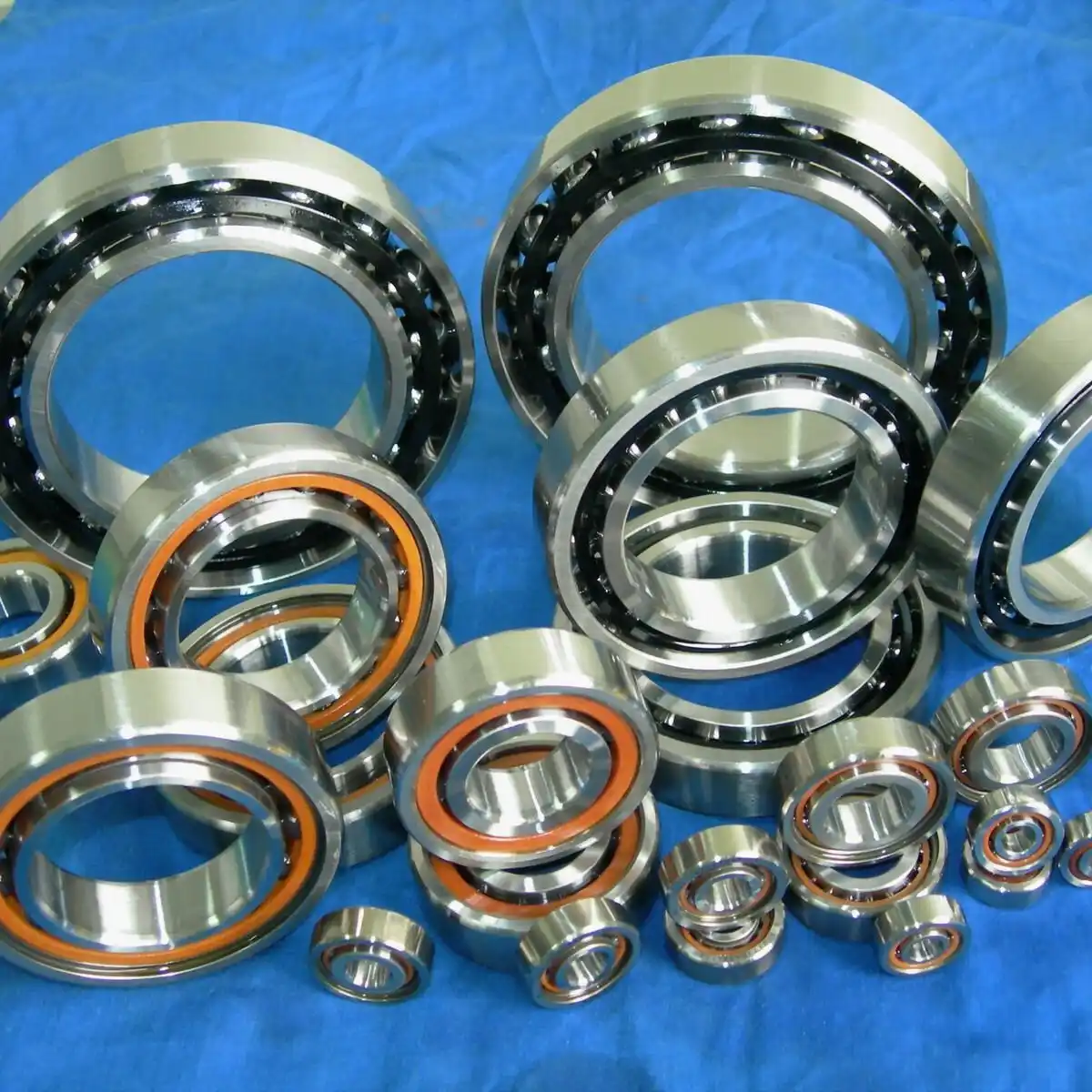
On one hand, the major shareholder just completed a cash-out of over 0.5 billion yuan; on the other hand, a private placement proposal of 1.5 billion yuan was put forward. The capital operations of Xinqianglian, a leading wind power bearing enterprise in Henan Province, have recently attracted widespread attention from the market. As a domestic leader that has broken overseas monopolies, this company is facing undeniable cash flow pressure amid robust performance growth.
The company publicly announced a plan to issue shares privately, aiming to raise no more than 1.5 billion yuan. Among this amount, 1.42 billion yuan will be invested in the 6MW and above high-power wind power bearing project in Zhangjiagang, Jiangsu Province, while the remaining funds will be used to supplement working capital. If this private placement is successfully implemented, Xinqianglian's total financing amount since its listing in 2020 will exceed 5.7 billion yuan. Over the past four years, the company has raised more than 4.2 billion yuan through IPOs, private placements, convertible bonds and other financing methods. The intensive financing reflects its continuous investment in the wind power bearing track.
As a leader in domestic wind power bearings, Xinqianglian's technical strength is regarded as an industry benchmark. With consecutive annual R&D investment exceeding 100 million yuan for four years, its R&D expenditure in the first three quarters of 2025 surged by 69.78% year-on-year. The company has successfully broken through the induction hardening technology without soft zones, becoming the only domestic enterprise capable of mass-producing 10MW-class offshore main shaft bearings. Its product range covers the full series of 3-18MW models. Products such as its 12MW offshore typhoon-resistant main shaft bearings and 14-meter-class shield machine bearings have broken the long-term monopoly of foreign-funded enterprises like Germany's Schaeffler and Sweden's SKF.
This technological breakthrough has been directly translated into strong performance growth. In the first three quarters of 2025, the company's operating revenue increased by 84.10% year-on-year, and its net profit attributable to shareholders soared by 1939.50% to 664 million yuan.
Behind the impressive performance, however, lies pressing cash flow pressure. In the same period, the company's net cash flow from operating activities was only 79 million yuan, a sharp decrease of 79.4% year-on-year, forming a stark contrast with its profit scale. The core cause lies in the special business model of the wind power industry: downstream customers are mostly state-owned power generation groups with long payment cycles. Under the company's "production-to-order" model, it has to continuously increase raw material procurement and production line investment to meet the surging order demand. Its Luoyang production base has been operating at full capacity, and the rising inventory and advance payments have further occupied capital. The core purpose of this private placement is to alleviate the liquidity pressure brought by capacity expansion and order delivery.
It is worth noting that the fundraising project is precisely aligned with the industry trend. With the advancement of grid parity for wind power, the large-scale development of wind turbines has become an inevitable trend, and the demand for 6MW and above high-power models has continued to boom, bringing broad market space for the corresponding wind power bearings. It is estimated that the scale of China's wind power bearing industry will reach 22.5 billion yuan in 2025. Once completed, the project deployed by Xinqianglian this time will form an annual production capacity of 1,150 units of high-power wind turbine bearings and 250 units of large-scale wind tower flanges, which exactly meets the demand driven by the 33.2% compound annual growth rate of offshore wind power bearings, further consolidating its first-mover advantage in the high-end market.
Nevertheless, the focus of market controversy still lies in the timing of "private placement after shareholding reduction". Although after this private placement, the Xiao brothers (the actual controllers) will still hold 22.07% of the shares and maintain their controlling shareholder status, the act of the actual controllers cashing out through shareholding reduction at a time when the company is in urgent need of funds for expansion inevitably makes investors question the use of funds and corporate governance. In addition, the competition in the wind power bearing industry is becoming increasingly fierce, and the localization rate of main shaft bearings above 3MW is still at a low level. Whether Xinqianglian can expand its capacity advantage through this fundraising and convert its technological barriers into market share remains to be tested by time.
From the perspective of the industry pattern, Xinqianglian's fundraising and capacity expansion are essentially an inevitable choice under the wave of import substitution. As core components of wind turbines, wind power bearings account for 5%-10% of the unit cost, and the gross profit margin of main shaft bearings is as high as 40%. However, this market has long been dominated by foreign capital, leaving huge room for import substitution. Xinqianglian's layout not only targets the 48-billion-yuan global market, but also echoes the accelerated localization trend brought by the large-scale development of wind power.
At present, the private placement proposal still needs to be reviewed by the general meeting of shareholders, examined by the Shenzhen Stock Exchange and registered by the China Securities Regulatory Commission before it can be implemented. For Xinqianglian, how to balance capital operations and entity development, effectively use the raised funds to enhance production capacity and profitability, and respond to market concerns will be the key to its subsequent development. On the track of import substitution, whether this Henan-based leader can achieve the leap from technological breakthrough to scale leadership through this 1.5-billion-yuan bet is something the market is waiting to see.


微信/Wechat