SMS code login
Password Login
Get SMS verification code

Get SMS verification code

2025-11-27
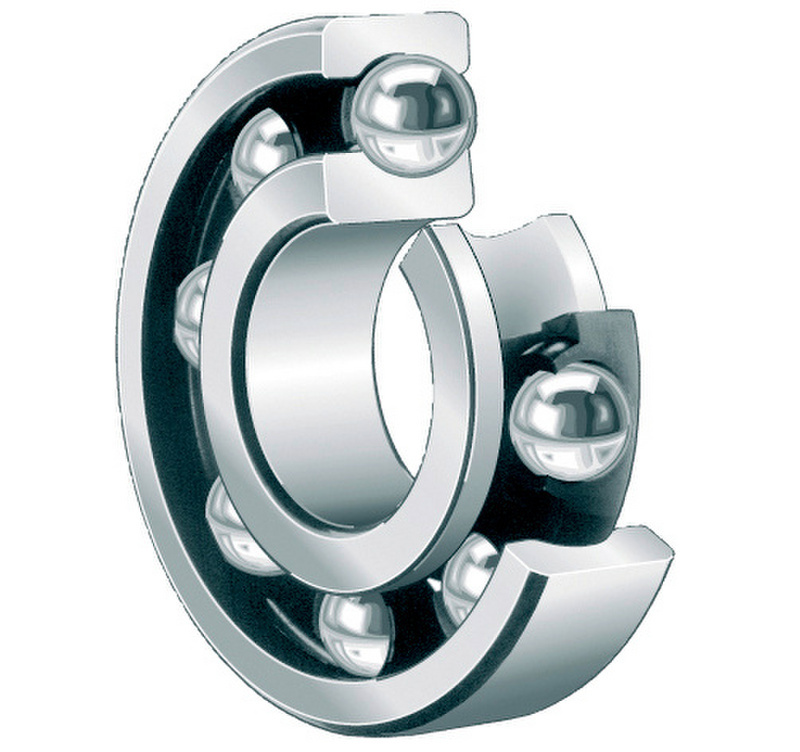
As the core transmission component of mining machinery and equipment, bearings serve as the "joints" ensuring the stable operation of shearers, scraper conveyors, roadheaders, bucket wheel stacker-reclaimers, and other equipment. Harsh working conditions such as high dust levels, high humidity, heavy loads with impacts, and large temperature differences between day and night are prevalent in underground coal mines and open-pit mines. Under the long-term influence of these environmental factors, mine bearings are prone to wear, corrosion, and failure, which not only lead to equipment shutdowns for maintenance but also cause significant production losses and soaring maintenance costs. This article will deeply analyze the core challenges faced by mine bearings in harsh environments and propose targeted solutions based on cutting-edge technologies and engineering practices.
During mining operations, coal mining, excavation, and material transportation generate massive amounts of coal dust and rock dust, with dust concentrations often exceeding 800mg/m³. These tiny particles can easily penetrate the bearing's sealing structure and mix with grease to form a highly abrasive paste-like substance. This mixture causes severe friction between the bearing's rolling elements and raceways, resulting in scratches and spalling on the raceway surface, while accelerating cage wear. For example, the support bearings of the tail drum of scraper conveyors are long-term exposed to dust generated by crushing operations; after seal failure, they often suffer excessive wear in a short period, becoming a high-frequency equipment failure point. Additionally, bearings in open-pit mines are subjected to erosion by hard particles carried by wind and sand, further exacerbating wear.
Underground roadways generally have a high-humidity environment, with water seepage and accumulation in some areas. Meanwhile, mine water often contains corrosive components such as sulfide ions. In such environments, ordinary bearing steel is prone to electrochemical corrosion, manifested as surface rust spots and pits, which severely damage the dimensional accuracy and structural integrity of the bearings. For mines near the coast, salt in the air further accelerates the corrosion rate. Corrosion not only directly reduces the bearing's load-carrying capacity but also interacts with wear to form a "corrosion-wear" vicious cycle, significantly shortening the bearing's service life. Roadheaders and other equipment operating in humid and dusty environments face particularly severe bearing corrosion issues.
Mining equipment mostly operates at full load or even overload. The bearings of the shearer's cutting mechanism must withstand instantaneous heavy impact loads, while scraper conveyors experience periodic load fluctuations when transporting large ore blocks. Such complex load conditions generate extremely high contact stress inside the bearings, leading to fatigue cracks in the bearing material under long-term action. If the cracks continue to expand, they will eventually cause serious failures such as raceway spalling and rolling element fragmentation. At the same time, continuous vibration generated by the operation of mining equipment can cause loosening of the fit between the bearing inner ring and the shaft, further exacerbating uneven load distribution, forming local stress concentrations, and accelerating fatigue failure. Due to the selection of bearings with insufficient rated load, some mines even experience catastrophic accidents of instantaneous bearing damage under impact loads.
Poor lubrication is one of the primary causes of mine bearing failures, and this problem is more prominent in harsh mining environments. On the one hand, dust pollution contaminates the grease, leading to a sharp decline in its lubrication performance; on the other hand, high temperatures, vibrations, and other working conditions accelerate the aging and deterioration of the grease, while low-temperature environments increase the grease's viscosity, making it difficult to form an effective oil film. The manual lubrication mode also has many drawbacks. For example, a single bucket wheel stacker-reclaimer in a mine has more than 100 lubrication points. Manual refueling is not only inefficient but also prone to insufficient or excessive lubrication. Insufficient lubrication causes direct metal-to-metal contact between bearings, generating a large amount of heat; excessive lubrication causes churning heat inside the bearing housing, which also impairs bearing performance.
Open-pit mines can experience temperature differences of tens of degrees Celsius between day and night. Underground equipment generates a large amount of heat during cutting, crushing, and other operations, leading to local temperature rises. Severe temperature changes cause uneven thermal expansion and contraction of various bearing components, damaging the internal fit clearance of the bearings. High temperatures also reduce the hardness of bearing steel and accelerate lubricant failure; low-temperature environments reduce the toughness of bearing materials, making them prone to brittle fracture under impact loads. For example, the open-pit coal mine in Hami, Xinjiang, experiences extreme heat in summer, strong sandstorms in spring, and large day-night temperature differences. The bucket wheel stacker-reclaimer bearings have long faced stability challenges caused by temperature fluctuations.
Material optimization is the foundation for improving the environmental adaptability of bearings. For base materials, high-purity bearing steel is selected, with oxygen content controlled at ≤15ppm, hardness reaching HRC62-64, and impact toughness ≥180J/cm². Its fatigue life can be increased by 50% compared to ordinary steel. For corrosion-prone scenarios, ceramic rolling elements (such as zirconia materials) can be used, with compressive strength ≥2500MPa, impact wear life twice that of steel rolling elements, and excellent corrosion resistance.
Surface strengthening treatment is also crucial. By applying a laser-clad cemented carbide coating (thickness 0.5-1mm), the bearing surface hardness can reach HV1200-1500, and wear resistance can be improved by 3-5 times. Nitriding treatment of the bearings, with a nitrided layer depth of 0.3-0.5mm, can increase the surface hardness to HV900-1100, with a salt spray test resistance time of ≥2000 hours. In addition, spraying a polytetrafluoroethylene (PTFE) coating on the bearing outer ring can effectively resist erosion by acid-base media, controlling the corrosion rate at ≤0.005mm/year.
In structural design, the bearing raceways are modified for heavy-load impact conditions, with the curvature radius coefficient controlled at 0.52-0.54, ensuring the contact stress distribution deviation ≤5% and reducing edge stress by more than 40%. The cage is made of high-strength nylon + glass fiber composite material, with a pocket clearance of ±0.02mm, ensuring a deformation of ≤0.01mm under a 500kN impact, enhancing impact resistance.
Sealing structure upgrading is key to resisting dust and moisture intrusion. A combined structure of "double-lip seal + labyrinth seal" is adopted, enabling the bearing to achieve an IP68 dustproof rating with a dust barrier rate of ≥99%. For high-dust scenarios, triple-seal bearings can be selected to better retain grease and block mud and dust intrusion. Meanwhile, a dustproof cavity with a depth of ≥15mm and a dust discharge channel with a cross-sectional area of ≥100mm² are added to the bearing housing to avoid dust accumulation forming abrasive sources.
Abandoning the traditional manual lubrication mode and promoting centralized lubrication systems is an effective way to solve the lubrication problems of mine bearings. For example, an open-pit coal mine in Xinjiang equipped its bucket wheel stacker-reclaimer with 3 sets of electric lubrication pumps and 2 sets of manual lubrication pumps to control lubrication points in different areas, and precisely deliver grease to each key part through a dual-line distributor. Such systems can control the oil supply pressure at 0.3-0.5MPa, with an oil injection error of ≤±5%, extending the lubrication cycle to twice the original.
The selection of grease must be adapted to the working conditions. Anti-contamination grease with excellent extreme pressure performance is chosen to ensure no performance degradation when the contaminant content is ≤0.1%. At the same time, a professional dustproof cabinet and electrical control box are installed for the lubrication system, the core pipelines are made of SUS304 stainless steel seamless steel pipes, and durable crimped hoses are installed at key parts to prevent dust from clogging the pipelines and ensure the stable operation of the lubrication system.
The application of intelligent monitoring technology can realize early warning of bearing failures. Temperature and vibration sensors are installed on the bearing housing, with a sampling frequency of ≥50Hz, temperature accuracy of ±1℃, and vibration accuracy of ±0.01m/s², to collect operational data in real-time. By building a data platform and setting early warning thresholds such as temperature ≥85℃, combined with a life prediction model, fault warnings can be issued 72 hours in advance, with an early warning accuracy of up to 95%. For equipment with severe vibration, shock absorbers can also be installed, or rubber mounting housings can be used to reduce the impact of vibration on the bearings.
Formulating maintenance specifications adapted to mining conditions is also crucial. During maintenance, compressed air is used to purge debris near the seals to avoid dust intrusion during disassembly. The maintenance cycle is adjusted according to different bearing types: deep groove ball bearings are maintained once a year, angular contact ball bearings every 6 months, and bearings in harsh environments every quarter. During installation, laser alignment tools are used to ensure the shaft and housing are aligned within a tolerance of ±0.05mm, avoiding uneven loads caused by misalignment.
Targeted customized solutions are required for the exclusive working conditions of different mining equipment. For the cutting bearings of shearers, the focus is on enhancing impact resistance, selecting self-aligning roller bearings for vibration-specific series, paired with copper alloy machined cages. For open-pit mine bucket wheel stacker-reclaimers, a five-way intelligent lubrication system is adopted to accurately cover more than 100 lubrication points for walking, slewing, bucket wheels, etc. For roadheader bearings, emphasis is placed on moisture and dust prevention design, using special sealing structures and corrosion-resistant materials for humid and dusty environments. Before mass application, verification links such as dustproof tests and fatigue tests are conducted. For example, a coal mine conducted a 3-month underground trial of scraper conveyor bearings without failures before full-scale promotion, ultimately achieving a 78% reduction in failure rate.
The reliable operation of mine bearings in harsh environments is an important guarantee for the safe production of mines. The challenges of wear, corrosion, and fatigue they face require coordinated responses through multi-dimensional technological innovations in materials, structures, lubrication, and operation and maintenance. With the continuous development of high-purity materials, intelligent lubrication systems, and online monitoring technologies, the service life and stability of mine bearings have been continuously improved. In the future, building an integrated "material-design-operation and maintenance" technical system to further reduce the full-lifecycle cost of bearings and improve mining production efficiency will become the core development direction of mine bearing technology.


微信/Wechat